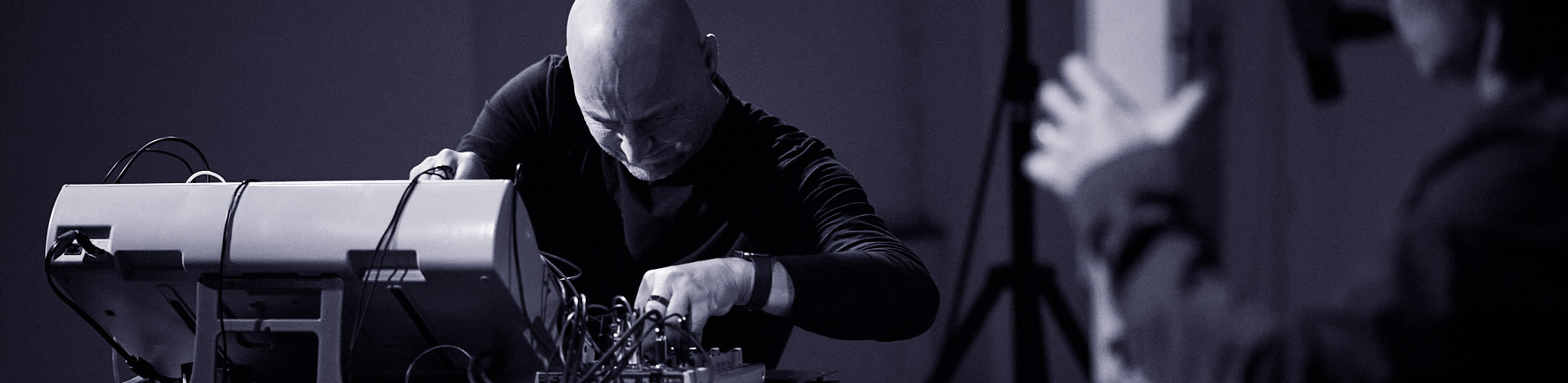
There is a new digital release out on September 15, 2026 at the music community platform Subvert. The release carries five drone based electronic pieces. It is basically a free download but you can name any price appropriate for you.
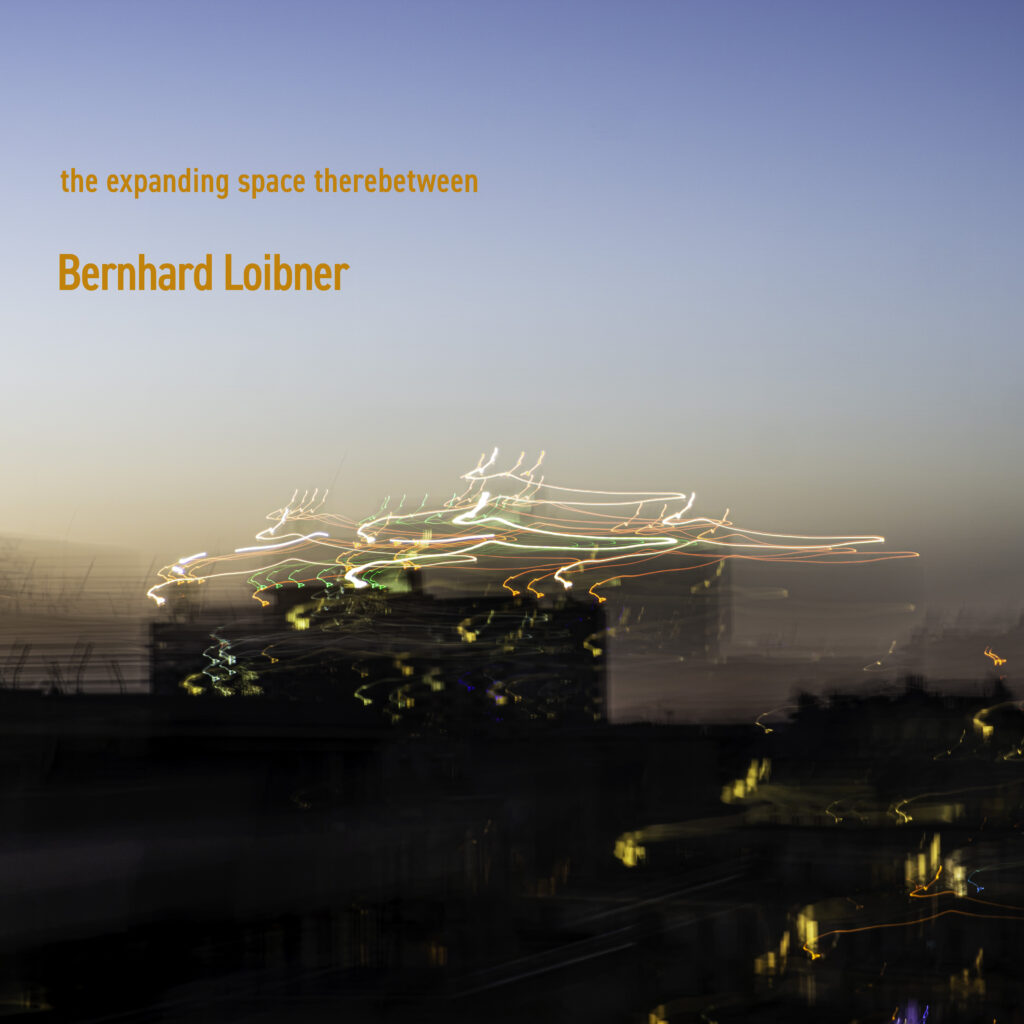
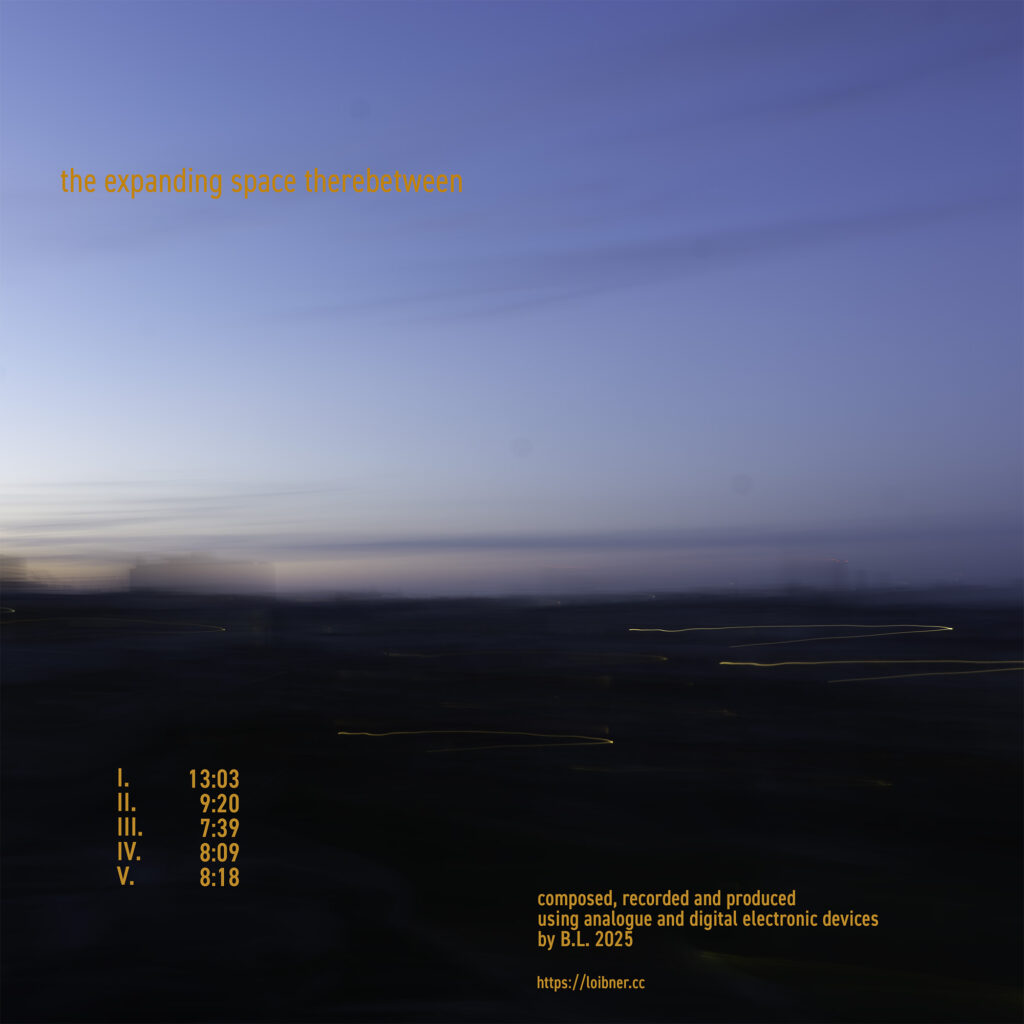
About the release:
The picture of expanding spaces has been with me for a while. It seems an apt metaphor for the sonic relations carrying the five pieces of this release. It seeks to express the space between musical gestures, between textures of sound, between sound and non-sound—not as a gap but as texture, not emptiness but charge. To treat the sonic interval as material itself. A drone that lingers until it seems to stretch minutes into epochs. The space between attack and decay expands until it becomes a place the listener can inhabit.
In compositional terms, this means resisting resolution. Keeping tones in their separate registers, preserving friction rather than smoothing it into consonance. The listener doesn’t arrive at a destination; they dwell in the passage. This approach treats intervals—the space therebetween—not as empty containers but as active participants in meaning-making.
Though the studio is a kind of safe space, similar expansions in the outside world have become impossible to ignore. The space between humans—the gaps that widen without acknowledgment, without ritual, without collective navigation. Processing matters. Ritual matters. How we relate to the interval determines whether it destroys or transforms us. The space between extremes seems to grow so vast that inhabiting it becomes nearly impossible. With the collapse of shared reference points, reality itself becomes negotiable; there is no common ground upon which to stand.
But the widening operates psychologically as well. Psychologists describe distancing as a coping mechanism—creating mental space from discomfort by abstracting, generalizing, or depersonalizing threats. The same psychological operation that protects individuals from anxiety also erodes empathy and accountability. When we distance ourselves from opponents, from consequences, from truth, the intervals grow wider. We stop inhabiting the same reality, drifting apart, widening the space between us.
If a system only references itself, it slowly loses its shape. Complex systems drift, ecosystems drift, civilizations drift—all moving slowly, incrementally, across a landscape of stability until reaching a critical threshold, then collapsing into a new configuration. No single moment causes the shift; it accumulates. Trust erodes by fractions.
Social systems behave similarly. Increased noise in channels of communication, reduced responsiveness to corrective signals, competing narratives refusing reconciliation. Like a structure approaching resonance frequencies it cannot withstand, societies exhibit tremors before collapse.
Sound, too, has its transitions. A drone that begins to oscillate. A rhythm that gradually loses synchrony. Frequencies that push toward thresholds where harmonic relations break down. These recordings attempt to capture these instabilities—not the collapse itself but the approach, the tense suspension before things reconfigure into a new shape. Whether that shape will be generative or destructive remains unknown. But the drift is already underway.
These two realms—the sonic and the political—converge in unexpected ways. Both involve intervals that refuse to close. Both demand new forms of attention. Just as these five pieces maintain dissonance rather than resolving it, political discourse no longer assumes a shared reality to reconcile. The interval—the space therebetween what we believe—expands.
It is in the center that no one occupies. It is in the silence between tones. It is in the psychological distance between us. It is in the drift of systems. It is in the exhaustion from constant recalibration.
The pieces of this release end without resolution. The listener walks away with the interval still open. The expanding space therebetween does not disappear. It waits. It is in us.
Composed, recorded and produced using analogue and digital electronic devices by B.L. 2025